Feedback operations guide
Build a customer feedback loop customers can trust
A feedback loop is complete only when the team responds to what it learned. Collecting ideas without acknowledgment, decisions, or follow-up creates an inbox—not a loop. Use a repeatable process from intake through post-launch learning.
Capture and acknowledge
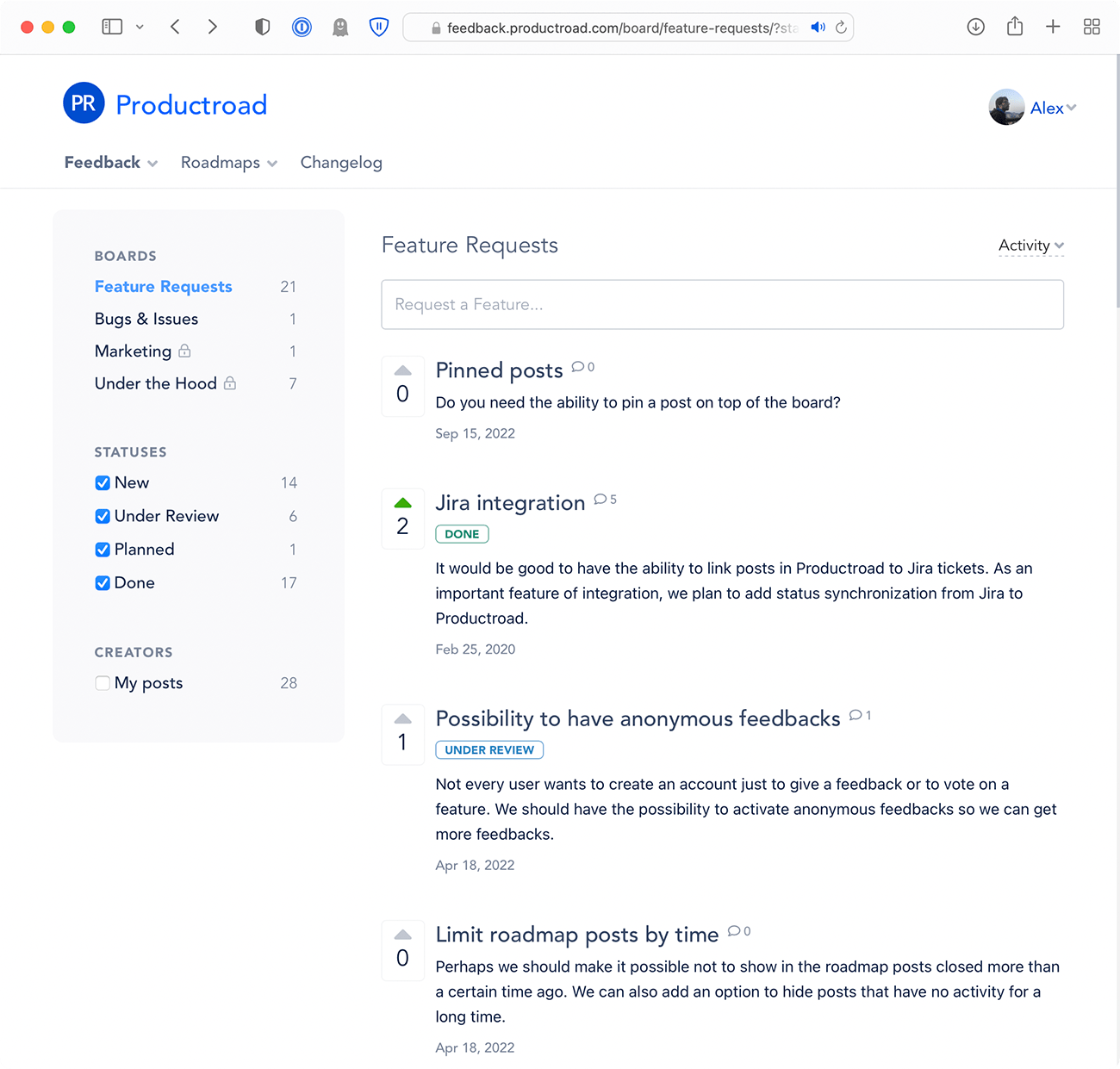
Offer a clear place for customers to submit, search, vote, and discuss. Also record feedback that arrives through support, sales, interviews, and internal teams, preserving attribution and the original use case.
Acknowledge that the input was received without implying it will be built. Duplicate suggestions and merging keep one conversation around each underlying problem.
Analyze, decide, and explain
Combine quantitative signals such as votes or affected accounts with qualitative context: urgency, workaround, customer segment, strategic fit, and evidence quality. Assign an owner and make the decision state visible.
Use internal comments for evaluation and public statuses for the level of certainty customers need. A roadmap can communicate direction, but should not turn early discovery into a false delivery promise.
Deliver, communicate, and learn again
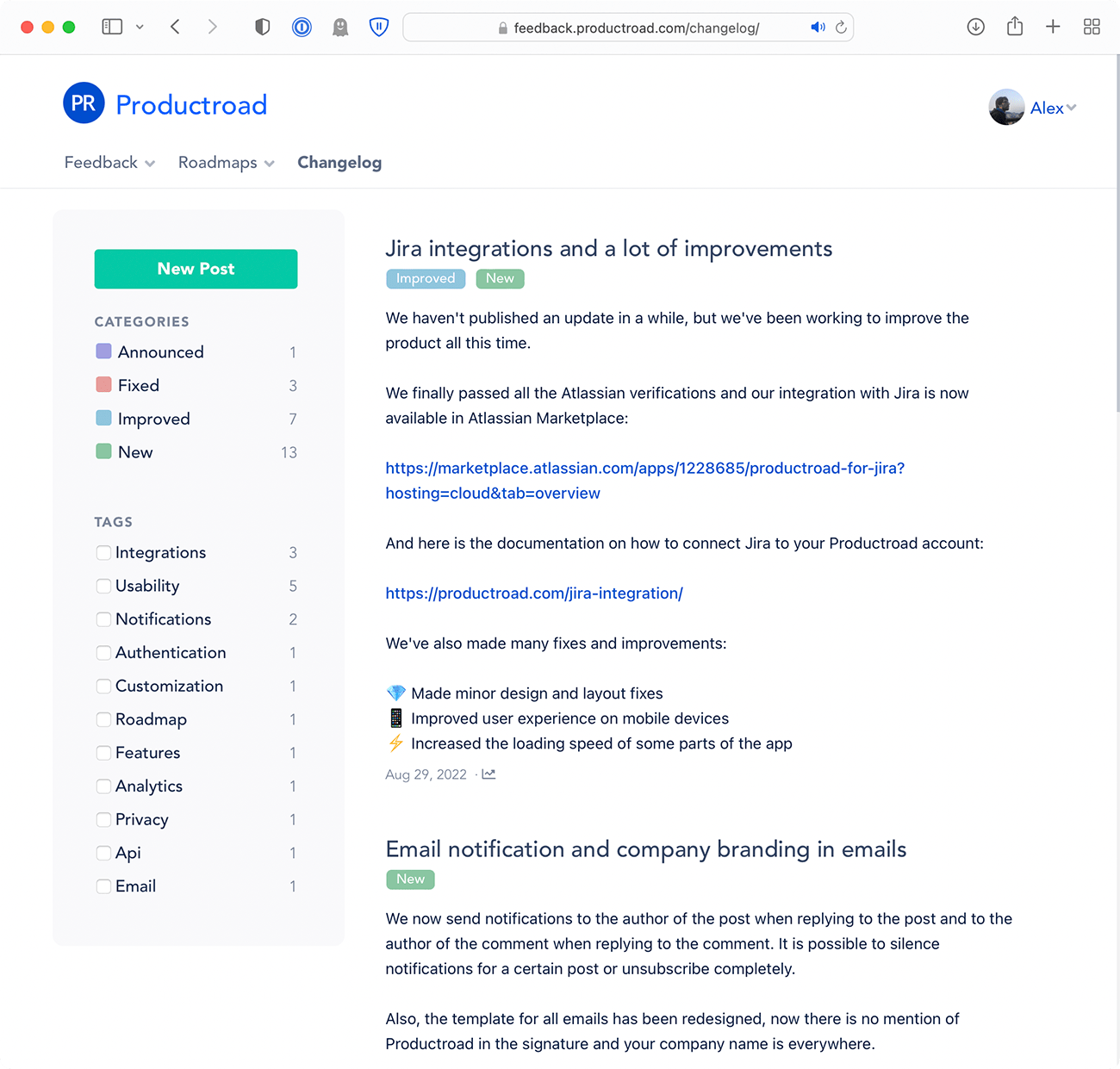
Notify interested users when meaningful progress occurs. When work ships, explain the customer problem addressed, how the change works, and where users can get help.
Invite reactions and comments, then compare post-launch behavior with the original problem. New evidence may confirm the solution, reveal an adoption issue, or start the next iteration of the loop.