Product management guide
How to prioritize feature requests without following votes blindly
Feature request prioritization turns scattered demand into a defensible decision. The goal is not to produce a perfect score; it is to compare problems using consistent evidence, make tradeoffs visible, and learn whether the chosen work delivered value.
1. Consolidate requests around customer problems
Search for duplicates before counting demand. Customers often describe the same obstacle with different feature ideas, and separate vote totals make the signal look weaker than it is.
Merge related topics while preserving comments, customer identities, segments, and source context. Write a neutral problem statement that distinguishes the job to be done from one proposed implementation.
2. Evaluate value, fit, evidence, and cost
Review how many relevant customers are affected, how severe the problem is, whether it supports the product strategy, what evidence exists, and how much delivery and ongoing maintenance the solution may require.
Votes can support the demand dimension, but they do not measure willingness to adopt, account value, urgency, strategic fit, technical risk, or opportunity cost. Use customer conversations and behavioral evidence where possible.
3. Make the decision and feedback loop explicit
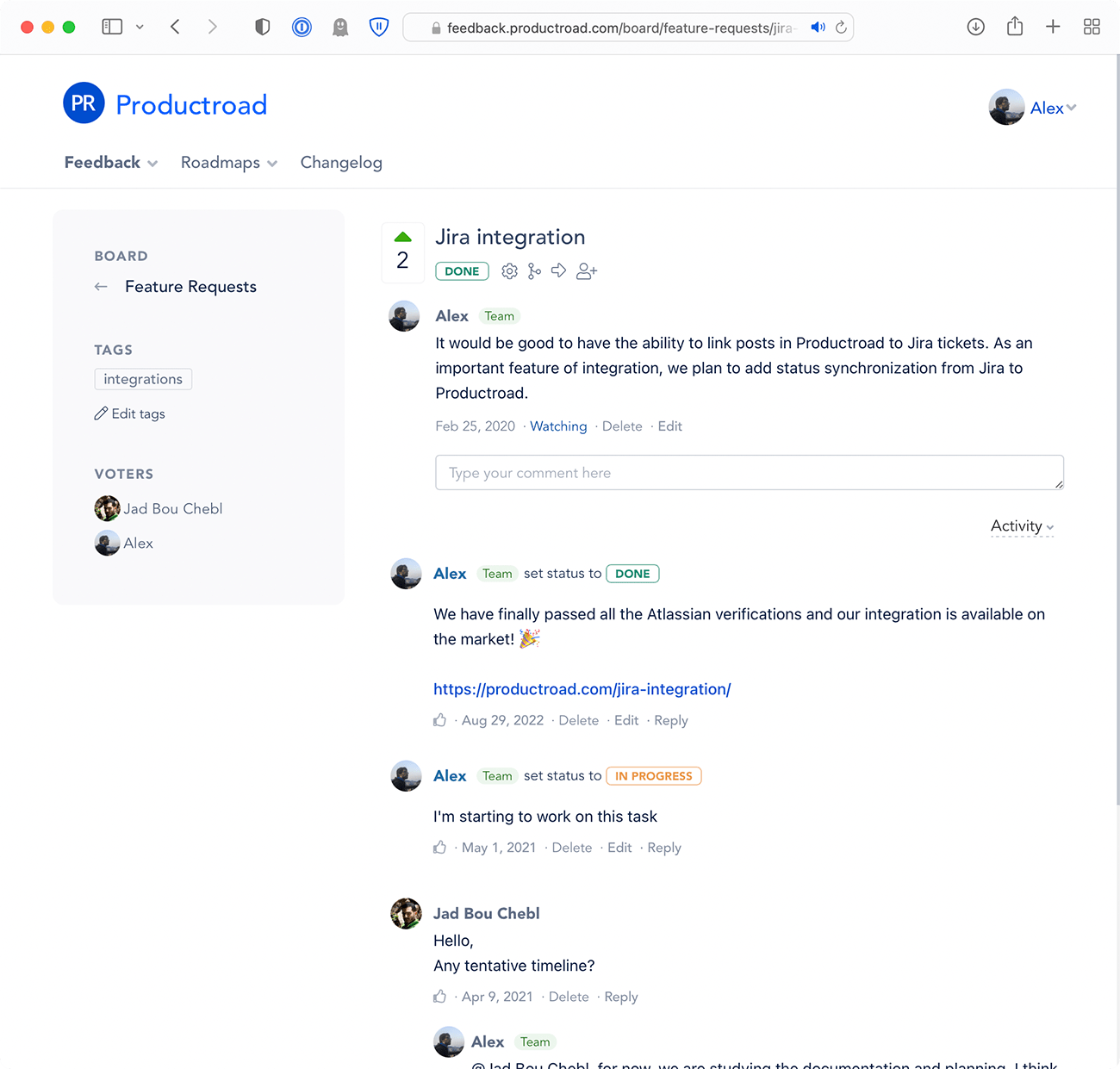
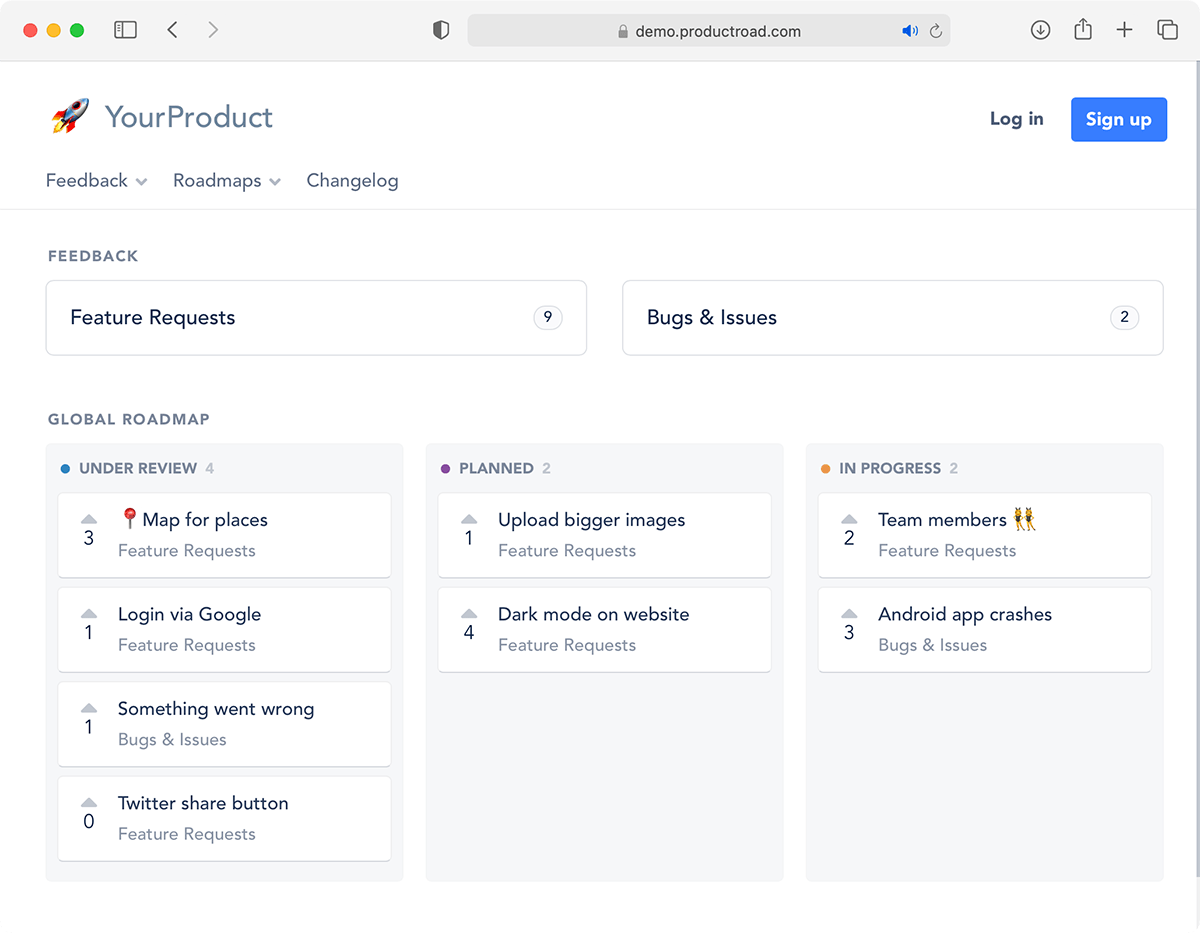
Record the owner, decision, assumptions, and next review point. Use statuses such as Under review, Planned, In progress, and Complete carefully so customers can distinguish exploration from commitment.
Publish appropriate work on a roadmap and notify followers when the status changes. After launch, announce the result and check whether the original problem improved; shipping a requested feature is not itself proof of impact.