Roadmap strategy guide
Public vs private product roadmap: choose by audience and risk
A roadmap is a communication view, not a dump of every delivery task. Public and private roadmaps serve different audiences, and many teams need both. Decide what each audience must understand and what information would create unnecessary risk.
Use a public roadmap to communicate direction
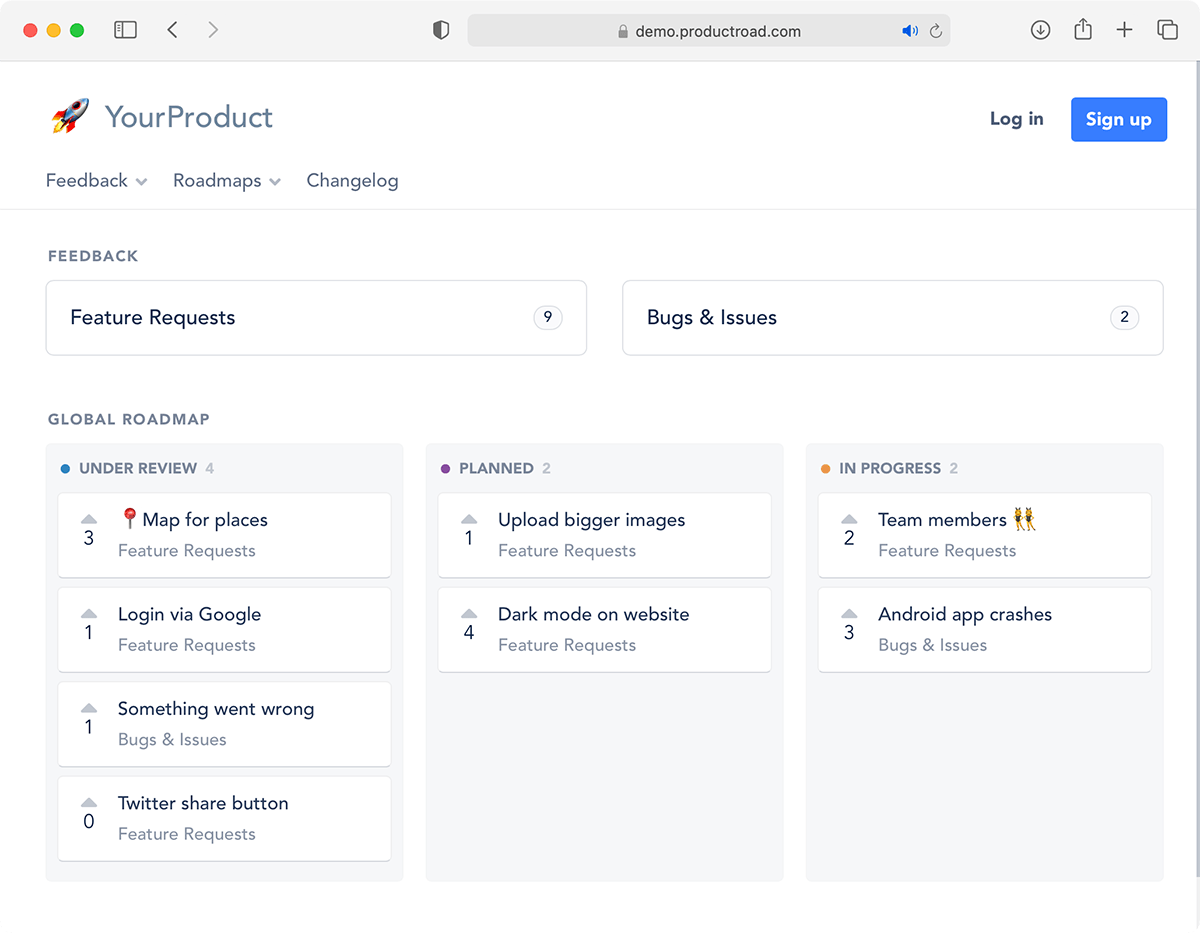
A public roadmap helps customers discover planned work, join existing requests, and understand the product's direction. Broad stages are often more credible than exact dates when scope and discovery can still change.
Publish only items useful to customers. Keep sensitive commercial plans, security work, technical dependencies, and unvalidated ideas out of a fully public view.
Use private roadmaps for detailed coordination
Internal stakeholders may need owners, dependencies, target dates, operational work, and decisions that are not ready for customers. A private roadmap can serve employees or a selected set of partners without exposing that detail publicly.
Private does not mean invisible to everyone: verified users or segments can support enterprise accounts, advisory members, or beta cohorts with a tailored roadmap.
Maintain multiple views from one source
Avoid copying roadmap items into separate documents. Filter a shared set of requests by board, tag, status, or audience so status changes appear consistently in the views where they belong.
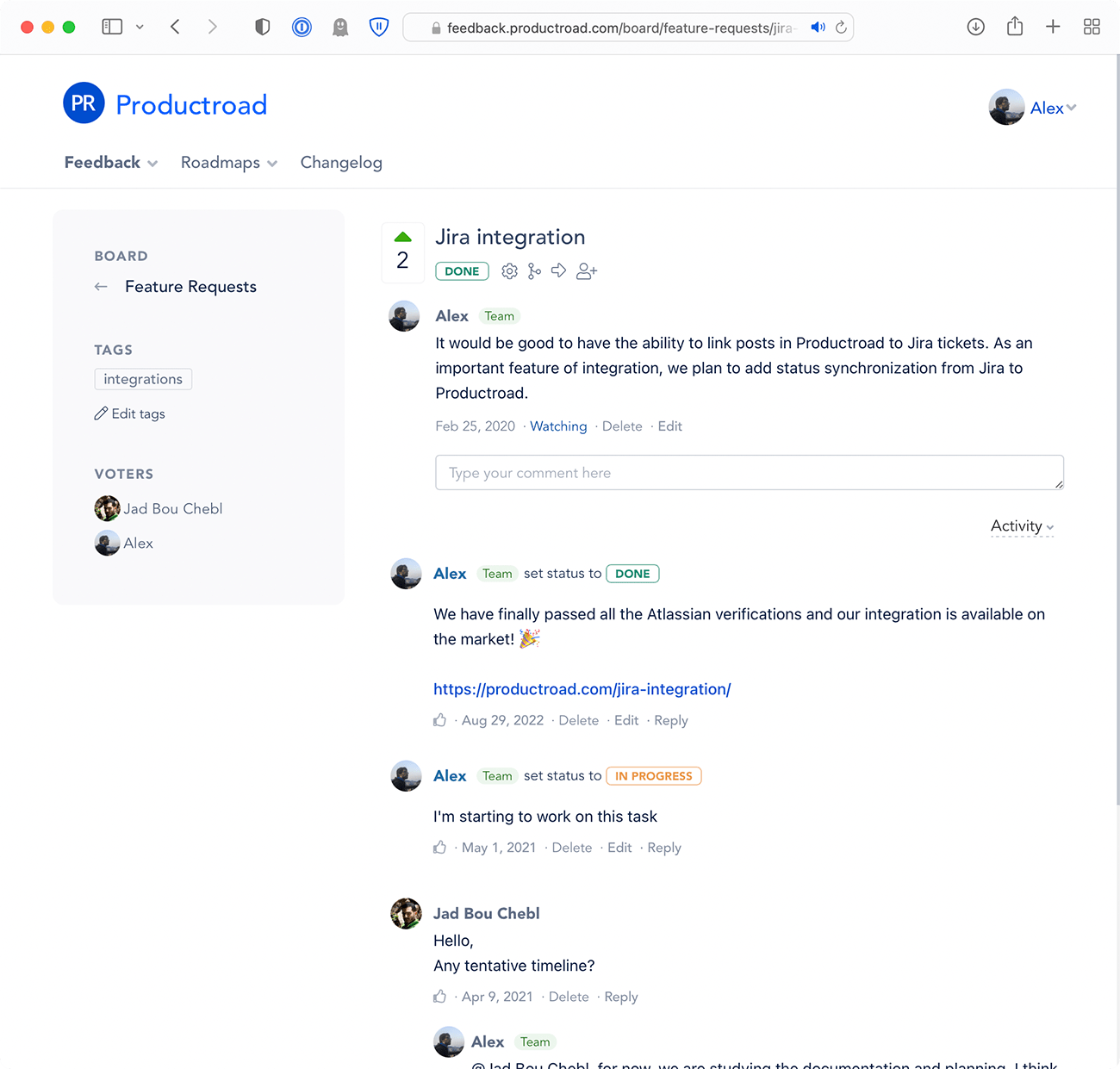
Review public views regularly, remove stale commitments, and explain changes. Pair the roadmap with request notifications and changelog entries to show progress without requiring customers to monitor a planning board.